Architecture, Urban Design & Collective Space

JIANGNING:
The Seamless Landscape
Jiangning District, Nanjing, Jiangsu
China
September, 2015
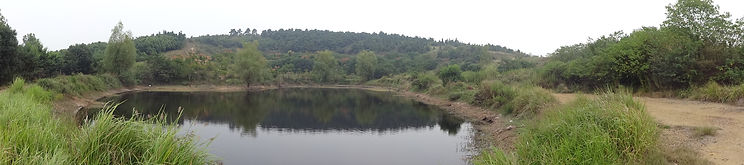
South of Nanjing, the Jiangning District unfolds in repetition—small artificial lakes, rolling tea hills, bamboo groves, and ghost villages fading into the landscape like echoes. It’s a landscape that appears pristine and tranquil, but look closer and the surface starts to repeat like a pattern too perfect, too rehearsed.
Each scene mirrors the last: a framed composition of water, foliage, and forgotten structures. From a distance, the formula is pleasing. Up close, it begins to blur into something less idyllic—an environment caught between preservation and staged memory.


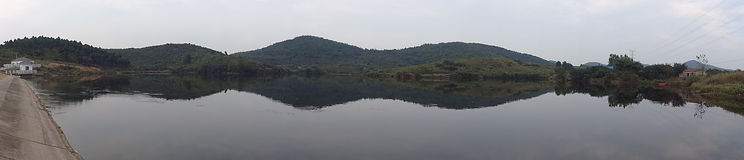
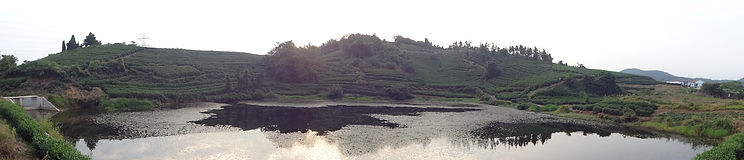
One hill in the background hides an ancient trail through a dense bamboo forest. It’s said the entire grove may stem from a single plant, a living rhizome expanding outward. Like the bamboo, the surrounding landscape has learned to replicate itself—first for survival, now for image. Villages once filled with activity are now empty shells, sustained more by nostalgia than need.
There’s beauty, but also a quiet sense of looping: walking, biking, or driving, the scenery folds back on itself. In fractal geometry, repetition can produce complexity; here, it risks a kind of monotony. The picture is beautiful, but it repeats for repetition’s sake.